Inseratsnr. 902585
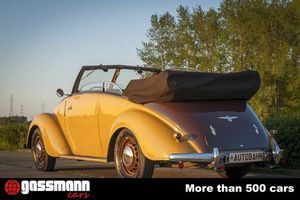
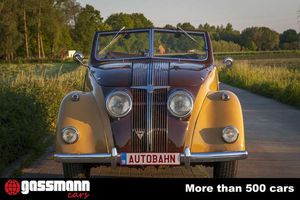
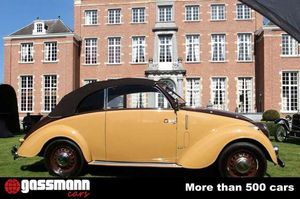
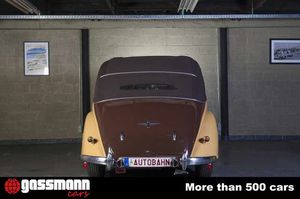
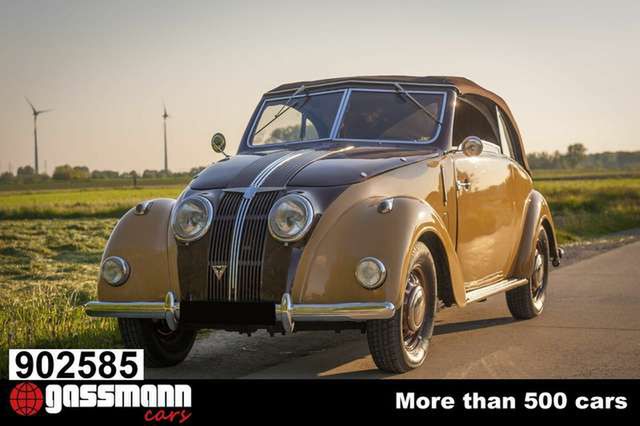
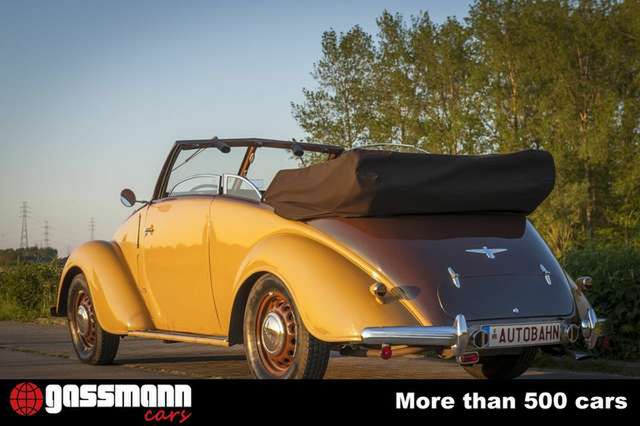
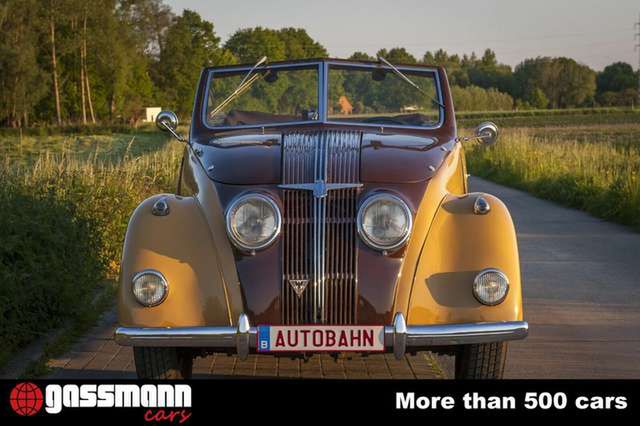
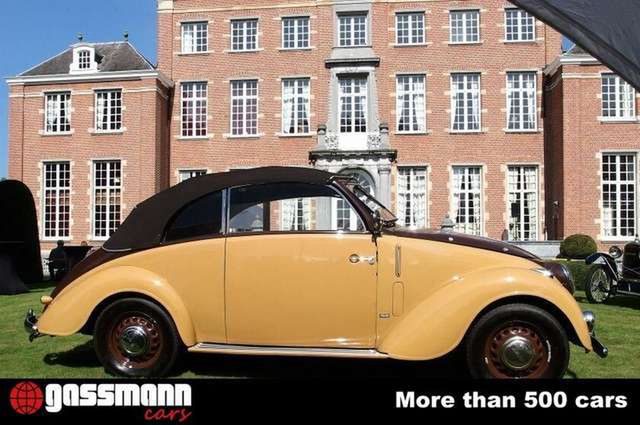
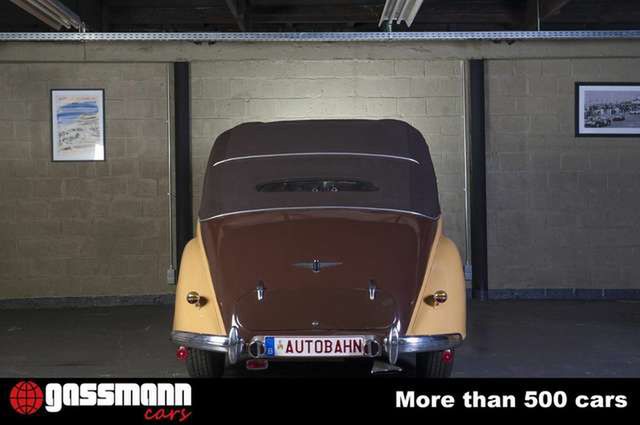
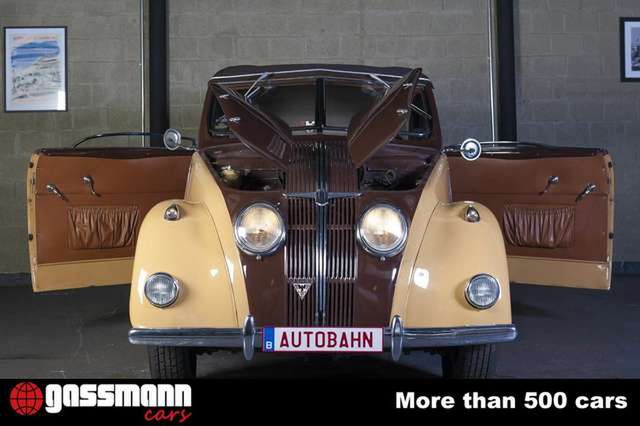
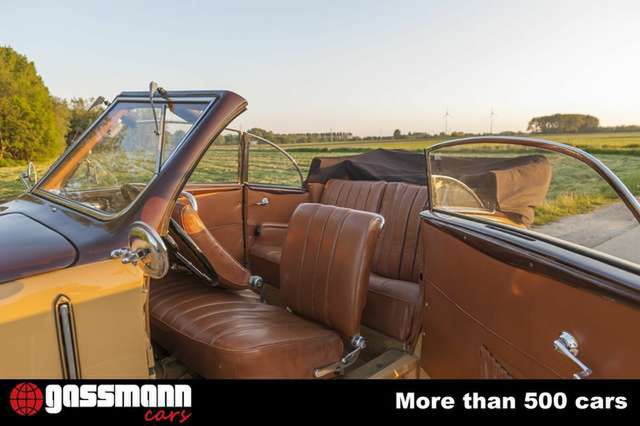
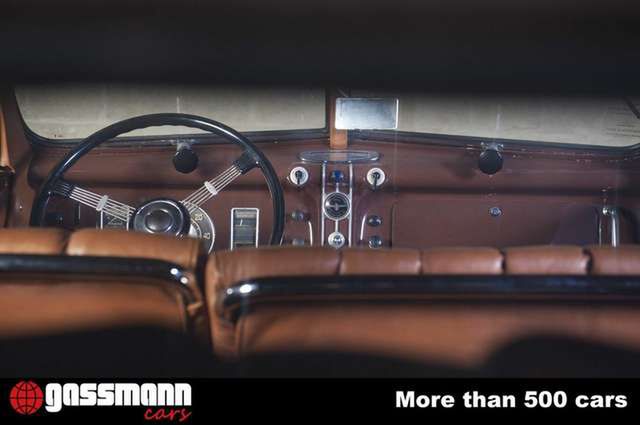
Sonstige Sonstige ADLER 2.5L Type 10 Cabriolet von Karmann
Gebrauchtwagen, Cabrio / Roadster
119.000 EUR
Technische Daten
Kilometer: 19.494 km
Farbe: braun Beige/Braun
Türen: 2
Leistung: 43kW (58 PS)
Hubraum: 2494 ccm
Leergewicht: 1350 kg
Erstzulassung: 06/1938
Nächste HU:
Getriebe: Schaltgetriebe
Kraftstoff: Benzin
Antrieb: Heckantrieb
Ausstattung
Umwelt 
INFORMATION:
Die angegebenen Werte wurden nach den vorgeschriebenen Messverfahren(RL 80/1268/EWG in der gegenwärtig geltenden Fassung) ermittelt. Die Angaben beziehen sich nicht auf ein einzelnes Fahrzeug und sind nicht Bestandteil des Angebotes, sondern dienen allein Vergleichszwecken zwischen den verschiedenen Fahrzeugtypen.
CO2-Effizienzklasse:
Kraftstoffverbrauch kombiniert: 0,00 l/100km
innerorts: 0,00 l/100km
außerorts: 0,00 l/100km
CO2-Emissionen kombiniert: g/km
Stromverbrauch: 0,00 kwh/km
Schadstoffklasse: Euro
Partikelfilter: nein
Emissionsärmster Kraftstoff: |
Beschreibung des Anbieters
• Fahrzeugstandort: Bovenden
Chassis No. 185535
Engine No. 354312
Belgian title
- 9 survivors identified
- Technical and aesthetic originality
- A fine example of late 1930s streamlined coachbuilding
- One of only a handful Type 10 cabriolets known to exist
- An older restoration (circa end of 1970s) by former Karmann employee
- 2.5-Litre, 6 cylinder engine
- 2018 Techno Classica Essen Concours dÃlégance FIVA award winner
- Featured on the cover of Oldtimer Plus magazine in 2007
2022 Wertgutachten 2- ( Marktwert 145.000 EUR )
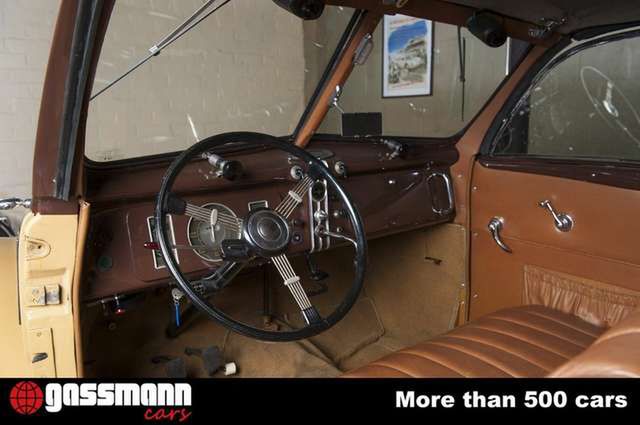
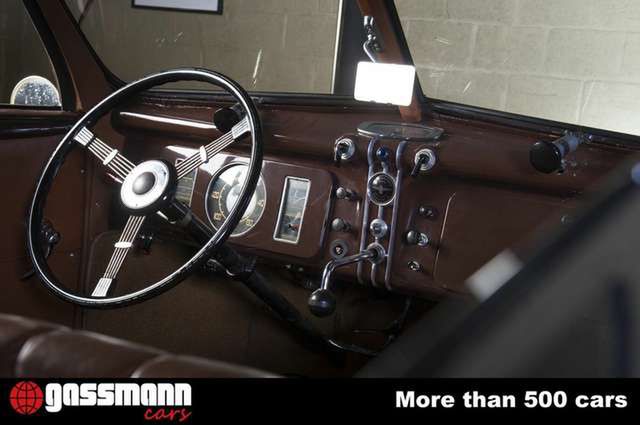
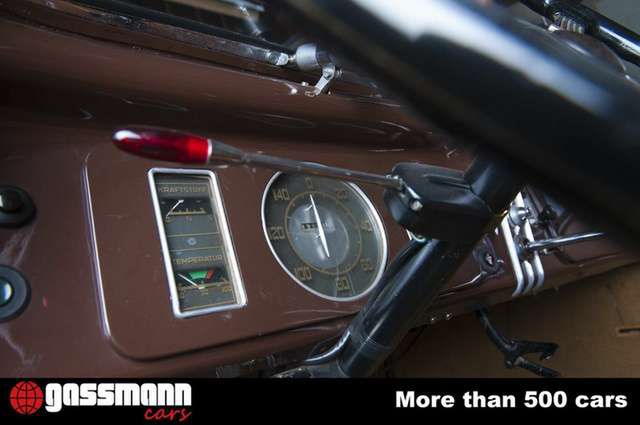
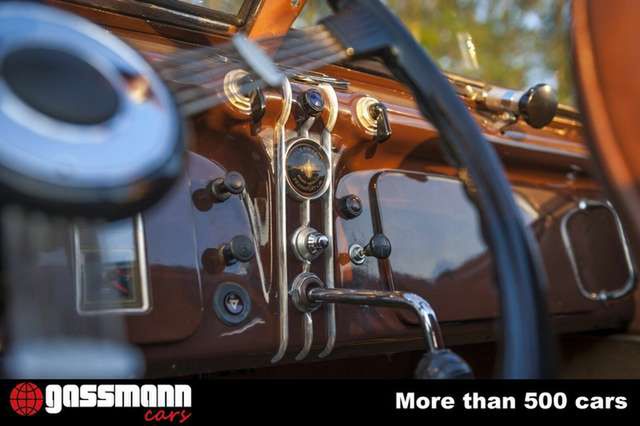
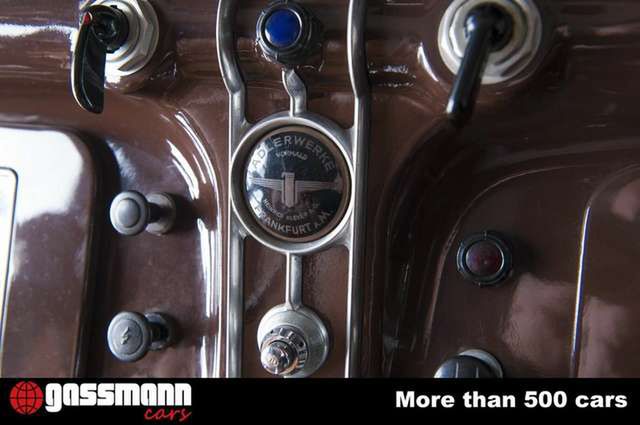
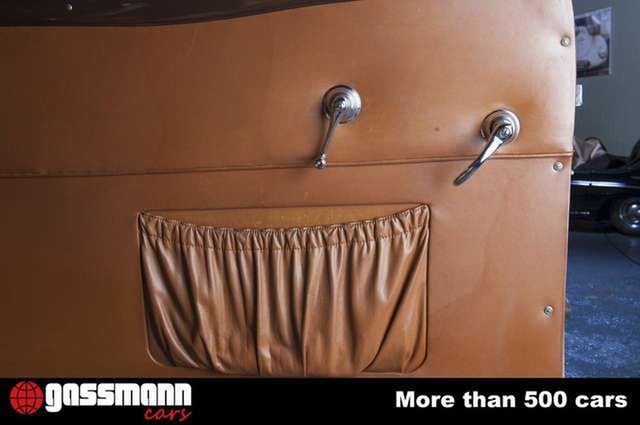
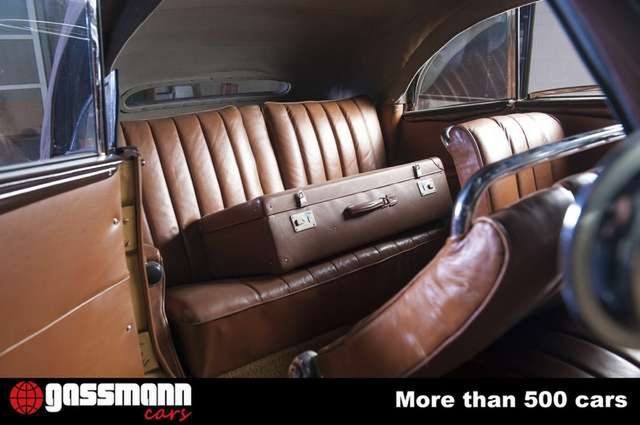
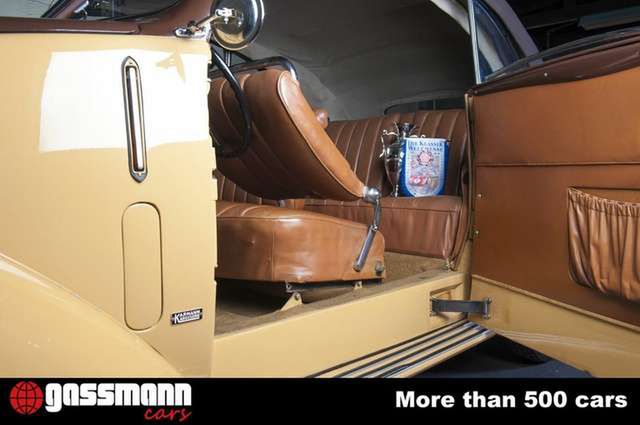
Presented at the 1937 Berlin Motor Show, the new Adler 2.5 caused a sensation as it was reflective of the streamline movement inspired by the teardrop aerodynamics. With its four independent wheels and hydraulic brakes, it was a technically modern car, while its proven and robust 2.5L 6-cylinder engine, mated to a 4-speed gearbox, gave it good performance. Despite its qualities, production stopped in 1940 and surviving examples are rare, even impossible to find when it comes to the Karmann convertible that we are offering. Retained in the same family for many years, it was restored in the early 1980s by a former Karmann employee, Ernst Fleischmann. Its current owner acquired it from the latter in 2014, and continued maintaining it, and in 2018 won the 2nd prize in its class at the Techno Classica Essen elegance competition. The car is now patinated and very well preserved, with many specific details that make it so charming. This Autobahn Adler was regularly maintained by LMB Racing in Wijnegem. This car has extensive period documentation. Rare and interesting, this convertible is as much a concours delegance car as it is an iconic design piece of the late Art Deco period.
Frankfurt-based Adler started out in the 19th Century as a bicycle manufacturer, turning later to the production of motorcycles, cars and the typewriters with which its name is most commonly associated today. A highly respected firm in its native Germany, Adler was already manufacturing automobile components when it introduced its first car - a Renault-influenced, De Dion-powered voiturette - in 1900. Within a few years the company was making its own single- and twin-cylinder engines, though by 1910 the range was powered exclusively by fours. Some of the latter were huge - as big as 7.4 litres - one of which was purchased by Kaiser Wilhelm II. Sixes and a straight eight were added to the range in the 1920s.
Adlers remained essentially conventional in design until the arrival in 1932 of the Trumpf. Designed by H G Röhr and premiered at the Geneva Salon, the Trumpf (trump) employed front-wheel drive and all-round independent suspension four years before the launch of CitroÃns similarly specified yet much better known Traction Avant. Rack-and-pinion steering was another Trumpf innovation and a feature that early Tractions lacked.
By this time, automotive engineers were beginning to recognise the importance of aerodynamics in passenger car design, and the Adler 2.5-Litre typifies this trend. Introduced at the 1937 Berlin Motor Show, Adlers streamliner caused a sensation and soon gained the sobriquet Autobahn Adler, reflecting its aptitude for relaxed cruising on Germanys expanding motorway network. Boasting the commendably low drag coefficient of 0.36, the strikingly different four-door fastback saloon body was the work of Karl Jenschke, formerly with Steyr-Daimler-Puch. The steel saloon bodies were built by Ambi-Budd in Berlin, while construction of the two- and four-door cabriolet bodies was entrusted to Karmann of Osnabrück. The welded box-section chassis was of the platform type.
The Type 10 was powered by a 2, 494cc sidevalve six producing 58 horsepower (80 in the Sport version), which was good enough to propel the slippery Adler to a top speed of 125km/h. The engine was coupled to a four-speed part-synchromesh (top three gears) manual gearbox driving the rea
Impressum & Rechtliches
Gassmann GmbH
| Handelsregister: | Amtsgericht Göttingen |
| Handelsregister-Nr: | HRB 1396 |
| Vertretungsberechtigt: | Helmut Gassmann |
|
Weitere Informationen zum offiziellen Kraftstoffverbrauch und den offiziellen spezifischen CO2-Emissionen neuer Personenkraftwagen können dem Leitfaden \"über den Kraftstoffverbrauch, die CO2-Emissionen und den Stromverbrauch neuer Personenkraftwagen\" entnommen werden, der an allen Verkaufsstellen und bei der Deutschen Automobil Treuhand GmbH (DAT) unter www.dat.de unentgeltlich erhältlich ist.
Beliebteste Marken
Audi VW Fiat BMW Mercedes-Benz Opel Peugeot Mazda Toyota